The Republican Health Care Plan –Baffle em with your BS

James Kwak at Baseline Scenario and here has a telling analysis of the republican non plan for health care.

He notes that the plan will gut medicare coverage, provide inadequate vouchers to pay for lost insurance coverage, allow insurers to push those with illness out of their coverage and if available into government sponsored high risk pools.

In short their “plan” is the health insurance industry’s dream. They can skim the premiums of those who are well and then eject from coverage those who need it most. Amazing.

Legislative timidity and the political obfuscation regarding health care is revealing. A pox on both their houses (republican and democratic)


Foreign Pharmaceutical Companies and U.S. Politics–Roche

In its annual report Roche notes the following:

Political contributions | US federal law prohibits us from making political contributions to federal candidates, although employees may make personal contributions to the Hoffmann-La Roche Good Government Committee (GGC), a voluntary political action committee, or participate in the Roche Action Programme. Employees contributed 416,680 US dollars through these mechanisms in 2008.

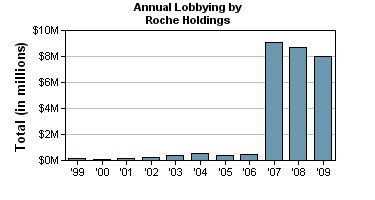
Lest you think that Roche doesn’t try to influence the political process consider their expenses for lobbying.

Total Lobbying Expenditures: $7,969,516
Subtotal for Subsidiary Hoffmann-La Roche: $5,037,516
Subtotal for Subsidiary Genentech Inc: $2,710,000
Subtotal for Subsidiary Roche Diagnostics: $222,000

And their yearly expenditures for lobbying the past few years, during our “recession/depression.”


Medicynical Note: Millions more are available from other companies. You can bet with the recent supreme court ruling they will be contributing to candidates–even though they are at heart a “Swiss pharmaceutical giant.”


Quirkiness–Money=free speech

The recent supreme court decision that equates corporate political contributions with free speech is remarkable, but not as remarkable as Alioto’s head shaking and mouthing “not true” to President Obama’s State of the Union remarks.

Consider Roche, a Swiss company, and Zeneca, a Swedish/British merged company, or Novartis, merged Ciba/Geigy/Sandoz, also a Swiss company. Think that these overseas interests or other myriad companies with overseas management will restrain their U.S. subsidiaries in their support of candidates favoring their business interests? Or consider U.S. companies incorporated offshore to avoid U.S. taxes. Will they restrain their U.S. subsidiaries from contributing to candidates favoring their interests?

True the supreme court didn’t rule on this specific issue but it does allow business interests to contribute unlimited funds under the guise of free speech.

Only in America would such a monstrous equivalence be established. Money= free speech, more money=more free speech. No wait, I do recall a book that noted “all animals are equal but some animals are more equal than others”–perhaps foreshadowing the U.S. model.

George Orwell, Animal Farm (1945)

Medicynical Note: Add this to my previous views on U.S. quirkiness.


Cutting Health Care Costs

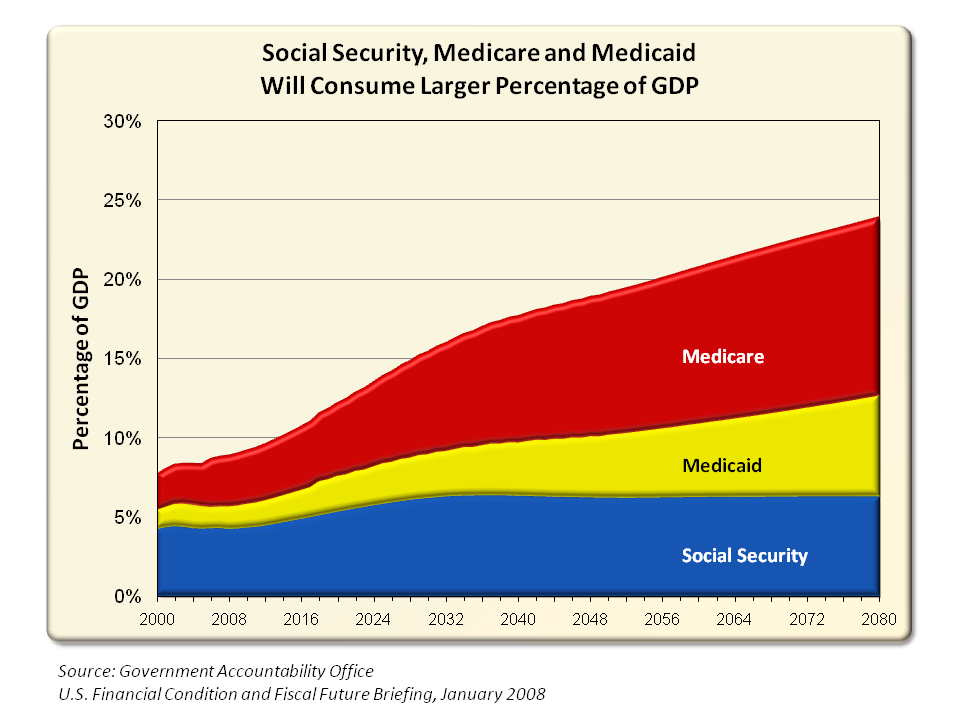
Clearly this trend cannot be sustained. And these government expenditures are only part of the snowballing costs of health care. This year we rejoice because in a depression/recession health care cost increases of 5-6% were only twice that of inflation. This is not cost containment.

Our conservative friends think markets would work to control health expenditures. That’s unproven and likely unworkable–see here, here, and here.

Patients are not in a position to shop health care. Finding the “best price” for emergency care and most other health care needs is simply not possible and the patient has to take whatever is available from the local supplier at the demanded price. Furthermore, health care is not like other commodities that people can take or leave as they wish. Buying a car or even a new home is an optional expenditure, health care is not. Yet health care costs/year for an individual can now approach and exceed these large expenditures.

Patient’s health care decisions reflect their anxiety, personal bias, financial status and understanding of the situation. This last factor should not be underestimated. Patients in the majority of instances cannot fully understand the risks and/or benefits of treatments and the alternatives, much less concern themselves with cost efficiency data. He/she is thus greatly influenced by physicians, manufacturers, insurers, etc., all with superior knowledge of the situation. All these advisors have extreme conflicts of interest that interfere with unbiased advice and undermine the notion of a “free health care market”–it doesn’t exist.

Medicynical note: The question is whether we have the political will to face this “music” and decide. We seem able to turn on a dime and go war, cut taxes for the wealthy and provide “tax incentives” for industry. For real people, however, we’ve become inert.

It appears our republican friends are unalterably opposed to change in the status quo that might affect the profits of their industry supporters. And the democrats, (it makes a cynic’s day) appear no more independent of industry influence.

Inaction will lead to more spending, more uninsured, more medical bankruptcy, more “free” ER use, more deaths from delays in care and a slow erosion in the general effectiveness of health care.

Somewhere between the “greatest generation” and our current one something happened. I think Pogo was probably right.


Lasik Surgery–Oversold or Simply the Risk of the Procedure

Elective surgery, particularly when it has a cosmetic or convenience rationale, should be completely safe and effective.

It now appears that LASIK (laser assisted in situ keratomileusis) has problems and the industry is being criticized for not be fully honest about risks. This in Salon notes:

Last spring, the FDA inspected about 50 Lasik facilities and found that many had no system in place for collecting and transmitting data to the FDA on patients’ reports of post-surgical “adverse events.”

And in August, Consumer Reports Health released the results of a survey, which found that 55 percent of Americans who’ve had laser vision correction surgeries are still wearing glasses or contacts some of the time. Fifty-three percent experienced at least one side effect within the first four weeks of the surgery; 22 percent of patients experienced them six months after surgery, especially dry eyes, halos, glare and starbursts around lights.

Lasik surgery, which can cost up to $5,000, has a 95.4 percent patient satisfaction rate, based on an analysis of research worldwide from 1996 to 2008,

Medicynical note; There are two problems here. The first is the push for revenue by LASIK providers. The more they do, the more they make. With such incentives providers tend to minimize risk and extend their indications for the procedure. The second is the patient wanting (for some reason desperately wanting) surgery assuming they have no to minimal risk or that the other person is more likely to get the complications.

This powerful drive for medical services and the tendency to ignor risk (and cost) is part of our system wide problem.


Post Capitalism? A Rant

Orphan Panuk writes of the post imperialistic melancholy of Turkey in mid 20th century. Are we in the throes of a post capitalism melancholy?

This manifests itself in many ways.

We’re quirky outliers. How else to explain a “civilized” modern culture with almost as many guns as people; slavish belief in original intent, whether the bible or constitution; our “modernity” and fundamentalist religious beliefs–talking in tongues, biblical infallibility, belief in angels and miracles, disbelief of evolution, faux morality, biblical quotations on gun sights; our inordinate use of the world’s resources and thinking it can go on forever; our most “moral” “god” fearing types publicly justifying torture; our inefficient health care system–the only industrialized nation without some form of national health.

We are an inefficient society. In health care that’s manifested by the most costly health care system in the world. This phenomenon is driven by greed which in the case of health care is not good. We do too many procedures, pay too much for them, and use unbelievably expensive medications that have no to minimal efficacy. Our non-system thrives, in regard to providing obscene profits for suppliers and providers, on its inefficiency. And it’s not just health care.

The love affair with deregulation which is the single most important cause of the loss of confidence in our “governing’ system–both domestically and internationally. We readily accept booms and busts and say it’s really good for us because it weeds out the weak!?

We’ve a financial/business ethic devoted to maximizing profit and the extravagant incomes of the deal-makers while moving jobs and industry elsewhere to do so. Our economy appears designed to cut incomes of the very consumers we expect to spend to keep our largely consumer driven economy growing. A paradox or idiocy? It doesn’t add up and the result is our continuing tightrope act of living on the hot air of bubbles and increasing debt facilitated by bankers and government. Is it time to pay the piper? Can we have a growing economy without increasing consumer income? or debt?

In the past we’ve touted our legislative body as being the most effective, thoughtful and democratic in the world. Yet when seen in action it’s dominated by obscene deal making and paid special interests. They’ve failed with deregulation and now give every appearance of failing on health care.

We have what we could clinically call a delusion that we are number 1, have God on our side and the responsibility, no right, to project power. We’re in wars without end also financed by debt. Pay for it with taxes! Are you kidding?

The conservative revolution of the 80’s promoted the fiction that we can do everything without paying for it. Yes step right up here folks we can cut your taxes and government revenue will increase–the Laffler curve. But it is a fact that the only balanced budget in the past 30 years occured under a moderate democrat’s administration after a tax hike. At this point we are awaiting the magic of the “Bush” tax cuts and we may have to way until hell freezes over or until we’ve collectively bankrupted the country. In the last 10 years there has been no job growth, declining incomes and massive debt accumulation, so goes the American dream. Our great grandchildren will be paying for our folly.

The right’s solution appears to be the magic of more tax cuts and a return to the gold standard. One wonders which century they are living in.

Our citizens live in the deluded world that they are owed military protection, services, retirement income and health care, and I do mean everything that can be done. The only catch is that they don’t want to pay for it now, or apparently in the future.

Shame on us.

Strong stuff on Bernanke here. “A Colossal Failure of Governance: The Reappointment of Ben Bernanke

Medicynical Note: Where’s my antidepressant–which is oversold by phamaceutical manufacturers as being super-effective. Also the American way.


Pass Reform Now or Pay Later!!


Either we do something now while the situation is just terrible or we wait till it gets worse, a Hobson’s choice?


Inflation–Good news Bad news–Health Care Remains a Problem

The inflation numbers for last year show an overall inflation of 2.50-3%. Not too bad.

However, health care plan premiums rose 5%. Yes that’s under the 10%/year average over the past decade (131% in 10 years) but it remains about twice the general inflation figure.

We do need health reform now!


The Cost of Care–a Graphic Graph

This from National Geographic:


(Click on figure for larger view)

They also comment:

The United States spends more on medical care per person than any country, yet life expectancy is shorter than in most other developed nations and many developing ones. Lack of health insurance is a factor in life span and contributes to an estimated 45,000 deaths a year. Why the high cost? The U.S. has a fee-for-service system—paying medical providers piecemeal for appointments, surgery, and the like. That can lead to unneeded treatment that doesn’t reliably improve a patient’s health. Says Gerard Anderson, a professor at Johns Hopkins Bloomberg School of Public Health who studies health insurance worldwide, “More care does not necessarily mean better care.”

Medicynical Note: Only an idiot would think we have the best “system” in the world. Unfortunately there appear to be no shortage of such in our culture.


Only in America–I’m tired of using this title

Uwe Reinhardt points out that community rating in health insurance is the norm in virtually all industrialized nations. Community ratings in these countries include age which means the elderly are not charged more than younger people–a policy omitted from our current health reform legislation.

The health systems of Switzerland, the Netherlands and Germany are frequently cited as potential models for a reformed American health system. All three countries offer their citizens a wide choice of health insurers — none of which is a government-run health plan. Yet in all three countries full community rating is de rigueur.

Meanwhile in the “best” health system in the world, insurers have been free to overcharge those with risk including the elderly to discourage their purchase of insurance resulting in part, in the 50 million citizens without insurance.

In the article Reinhardt contrasts the sense of “community” in various countries and the ethic that allows, indeed facilitates, the implementation of universal health care.

Medicynical Note: Americans are outliers in the world in a number of ways. The near religious (read on) notion of “original” intent of the founding fathers, our love affair with guns, our aggressive literal “word of God” religious beliefs, and our non system of health care to name a few.