Category Archives: Health Economics

Myeloma Survival–How much better? and can we afford it?

Jane Brody in today’s Times talks of the improvement in survival in multiple myeloma.

She notes there has been marked improvments in survival.

My guarded optimism stems from the progress made in devising treatments for several less well-known malignancies. For many patients with cancers like chronic lymphoma, chronic myelocytic leukemia and now multiple myeloma, longevity lies in the ability of science to remain one step ahead of the malignancy by unraveling its genetic and molecular underpinnings and producing treatments tailored to counter them.

How good is good?

The analyses found a definitive overall increase in the survival of MM patients over the past decade. In particular, five-year survival increased from 28.8 to 34.7 percent, and 10-year survival increased from 11.1 to 17.4 percent. Importantly, survival increased most dramatically in the youngest age group — more than half (56.7 percent) of patients younger than 50 survived at least five years, and more than 40 percent (41.3 percent) survived at least 10 years. In real years, the average relative survival increased from four years after diagnosis in 1990-1992 to almost seven years after diagnosis in 2002-2004.

Patients age 50-59 also fared well, with approximately half (48.2 percent) surviving at least five years, and nearly a third (28.6 percent) surviving at least 10 years. However, only modest increases were seen in the age group 60-69, and virtually no improvement was seen in patients older than 70. Since about half of MM patients are diagnosed when they are 60 or older, the lack of improvement in the eldest groups is a critical finding of the research.

Medicynical note: There are two problems with Brody’s analysis. First as noted in the latter review of progress there has been “modest” improvement for those age 60-69 and no improvement in patients older than 70. FYI the median age of myeloma patients is 66 with just 2%, thankfully, under age 40. Secondly, the cost of new treatments is excessive. The treatments recommended are in the range of $50,000-$100,000/year or more for the drugs alone and multiples of $100,000 for the transplants. This in a disease in which 5 year survival has “improved” to 34%.

Yes, there has been progress but it’s been mainly limited to younger patients and is at tremendous cost. We need to find a way to be more efficient and provide better value.


Why we pay more for health care!?

Pricing of health care in Massachusetts was analyzed by the Attorney General of that state. She found:

A. Prices paid by health insurers to hospitals and physician groups vary significantly within the same geographic area and amongst providers offering similar levels of service.

B. Price variations are not correlated to (1) quality of care, (2) the sickness of the population served or complexity of the services provided, (3) the extent to which a provider cares for a large portion of patients on Medicare or Medicaid, or (4) whether a provider is an academic teaching or research facility. Moreover, (5) price variations are not adequately explained by differences in hospital costs of delivering similar services at similar facilities.

C. Price variations are correlated to market leverage as measured by the relative market position of the hospital or provider group compared with other hospitals or provider groups within a geographic region or within a group of academic medical centers.

D. Variation in total medical expenses on a per member per month basis is not correlated to the methodology used to pay for health care, with total medical expenses sometimes higher for risk-sharing providers than for providers paid on a fee-for-service basis.

E. Price increases, not increases in utilization, caused most of the increases in health care costs during the past few years in Massachusetts.

F. Higher priced hospitals are gaining market share at the expense of lower priced hospitals, which are losing volume.

G. The commercial health care marketplace has been distorted by contracting practices that reinforce and perpetuate disparities in pricing.

Medicynical Note: Why do we pay more? Because our health care system is not a system. It’s a mechanism for manipulation and wealth accumulation not health care.


Why our economy has been non-competetive for years

Back from Vacation. This from OECD: factbook 2009

Medicynical Note: The opposition’s side show is quite amazing given these numbers. We certainly can’t continue like this. The party of NO has no ideas, no questions and no answers. Their views open the door to an empty room.

Passage of this bill is just a first step. Now comes the hard work and more decisions. We must now bring our costs in line with our competitors in the world. That will mean a careful look at expenditures; modifying our practice incentives; controlling the cost of innovation (patent reform) and controlling expectations–of patients, of providers and suppliers.


Segregation, not good in race relations, not good in health care

Health Insurance giant Anthem Blue Cross said it was raising rates on thousands of individual policyholders in California because the cost of their medical care exceeded the premiums they paid last year.

At the same time, other parts of Anthem reaped a profit. A Times analysis of the company’s regulatory filings shows that $525 million in Anthem’s earnings in 2009 was shipped to its corporate parent WellPoint Inc. The analysis was not disputed by Anthem.

Anthem Blue Cross has been so profitable that, since WellPoint acquired it in 2004, it has contributed more than $4.5 billion to the parent company’s bottom line.

Medicynical note: These hikes reveal the insurer’s strategy of segregating patients into risk groups. It allows Anthem to selectively raise rates on those who cost them more. So if you have a small group with a few patients with illnesses your rates will go up. If you are an individual buying health insurance you rates go up if you have illness, frequently to the point that you can’t afford the coverage. The rate hikes are designed to do just that.

Quite a system. Insurer’s can systematically extinguish their risk. Patients who need the coverage most are priced out of the market. They are forced to bankruptcy, government programs, and “free” ER use–the republican health plan.


Why new drugs are so expensive–AstroZeneca fostamatinib

AstraZeneca has purchased the rights to a new arthritis drug (fostamatinib). If you are wondering why drugs are so costly consider this.

AstraZeneca on Tuesday said it’s reached a pact to pay Rigel Pharmaceuticals up to $1.25 billion before royalties (medicynical emphasis) to license a drug used to treat rheumatoid arthritis.

AstraZeneca, in buying the drug, is paying for the previous research and future profits. Consumers will get to pay for both these companies revenue.

This is not a unique practice in the drug manufacturing industry.

“We believe that the terms Rigel secured compare very favorably to the other two compounds that are now in the hands of U.S. large pharma companies, with higher economics in terms of both up-front and future milestones,” he said in a note to clients.

Is it any wonder that drugs are so costly. Is this the market providing impetus for efficiency and competition or is it monopolistic practices manipulating the market to assure high prices and profits?

Medicynical Note: (added 2/18) My objection to this type maneuvering is the doubling of the profit requirements. Astrazeneca pays, the developing company, for the right to own and market the drug and also for future profits. Meanwhile AstraZeneca has its own profit needs that have to be fulfilled. In a single stroke the company is obligated to earn double profits on an already expensive drug–guess who pays.


Your Money of Your Life–Herceptin and Breast Cancer

Very strange article in the Atlantic arguing all sides of health/cost debate. Virginia Postrel apparently believes that Heceptin, a costly ($60,000 for a course of treatment) biological drug that is used for breast cancer, saved her life. This despite the fact that at one year after diagnosis it is much too early to declare victory.

She indeed has a bad form of breast cancer, 6 lymph nodes positive. She was told there was a 50% chance of surviving.

The statistics she provides are vague and not well documented in the medical literature. For example she states:

“Adding the biological drug Herceptin, approved by the FDA in 2006 for use in early-stage cancers like mine, could increase my survival odds from a coin flip to 95 percent.”

There is no data to support this contention. Herceptin appears to delay recurrence and probably improves survival but how much is still unclear. 95% is a number that greatly exaggerates the benefit.

The New England Journal article cited by the Atlantic piece reported:

“1694 women assignedto one year of trastuzumab, and 1693 women assigned to observation.We report here the results only of treatment with trastuzumab for one year or observation. At the first planned interim analysis(median follow-up of one year), 347 events (recurrence of breastcancer, contralateral breast cancer, second nonbreast malignantdisease, or death) were observed: 127 events in the trastuzumabgroup and 220 in the observation group. The unadjusted hazardratio for an event in the trastuzumab group, as compared withthe observation group, was 0.54 (95 percent confidence interval,0.43 to 0.67; P<0.0001 by the log-rank test, crossing theinterim analysis boundary), representing an absolute benefitin terms of disease-free survival at two years of 8.4 percentagepoints. Overall survival in the two groups was not significantlydifferent (29 deaths with trastuzumab vs. 37 with observation).”

Not nearly as impressive.

The data Ms Postrel herself provides is that chances of recurrence were 1 in six without Herceptin and 1 in 12 with it after two years. Just to be clear, consider that the 1 in 6 recurrence rate means that 16.6% would recur in the non Herceptin treated group. And 1 in 12 (8.3%) would recur in the treated group.

This is a considerable improvement but an exceptionally costly one. It means that out of 100 people treated 8 or so get a benefit. 84 were not going to recur with or without treatment. And around 8 would recur regardless of the treatment used.

At $60,000/patient for Herceptin, 100 patients treated would cost 6 million dollars to treat. Out of the 100 treated, 8 patients would have an improved outcome, a cost of $750,000/patient who benefits.

This is an unimaginable amount for a health care system to spend and it is no wonder that systems think twice before implementing routine use of Herceptin.

The question is whether any health care system can afford this unless they more carefully select patients.

Medicynical note: Our costly pharmaceutic industry prices drugs for cancer patients an order of magnitude higher than drugs developed for less severe illness. Their development costs are a “trade” secret so one can only guess whether the pricing is justifiable. A medicynical guess is that this is a very profitable cost-plus business and that frugality and efficiency are not in these companyies lexicon. They charge based more on the desperateness of the patient’s situation than by the cost of development or even effectiveness of the drug. For example they spend more on drug promotion and advertising than on research.

These drugs are priced high despite the fact that many of them were financed with public funds. Even very effective drugs that required little clinical testing because of their obvious efficacy (admittedly an unusual occurrence) are priced over $50,000/year.

To give this pricing perspective consider that

  • drug costs are increasing at double the rate of inflation
  • incomes dropped several thousand dollars over the past few years
  • the cost of these single drugs alone exceed the median income of U.S. citizens
  • Medical care has superseded home and auto purchases as the most expensive purchases in a lifetime. Amazing

Ms. Postrel notes that we pay more/capita for drugs than New Zealand but what she doesn’t say is that the U.S. non-system spends twice as much as many industrialized nations on all aspects of care; that the U.S. is the only industrialized nation without some form of national health system; and that our outcomes in cancer are only as good as but not significantly better than many other industrialized nations.

As T.R. Reid noted recently:

“Which, in turn, punctures the most persistent myth of all: that America has “the finest health care” in the world. We don’t. In terms of results, almost all advanced countries have better national health statistics than the United States does. In terms of finance, we force 700,000 Americans into bankruptcy each year because of medical bills. In France, the number of medical bankruptcies is zero. Britain: zero. Japan: zero. Germany: zero.”

For people with cancer it’s truly your money or your life, and sadly most of these treatments in advanced disease do not cure and often don’t even improve patients’ outcomes.

Lastly I certainly hope that Ms. Postrel is cured.

Anthem Blue Cross, Its the money stupid

Anthem Blue Cross follows the time honored health insurer practice of flushing high risk people out of the beneficiary pool by increasing rates. 39% increase for thousands of individual policy holders in California. It’s great for business but bad for healthcare.

Wellpoint is the owner of Anthem. It’s stock price is at 61.45. The company earned 4.7 billion dollars last year, yes billion, or $9.88/share. This is in the range of 15% of the stock price. A return of 15%/year is astounding in a bear market.

Medicynical Note: This company’s primary goal is not the care of the sick and infirm but profits. Is this a health care system? Or a money making system? It can’t be both without bankrupting us all.


Cost’s are Increasing

Amazing:

In a stark reminder of growing costs, the government has released a new estimate that healthcare spending grew to a record 17.3% of the U.S. economy last year, marking the largest one-year jump in its share of the economy since the government started keeping such records half a century ago.

The almost $2.5 trillion spent in 2009 was $134 billion more than the previous year, when healthcare consumed 16.2% of the gross domestic product, according to an annual report by independent actuaries at the federal Centers for Medicare and Medicaid Services, or CMS, scheduled for release Thursday.

Medicynical Note: Healthcare reform is inevitable. The question is whether it will follow the republican dream plan for insurers or be a more benevolent plan that aims to benefit those who need care most–our citizens and those with illness.

At this point the odds are 60-40 against passage of the current initiative which would assure affordable insurance to 94% of our population and cut costs over time. Doubly amazing.


The Republican Health Care Plan –Baffle em with your BS

James Kwak at Baseline Scenario and here has a telling analysis of the republican non plan for health care.

He notes that the plan will gut medicare coverage, provide inadequate vouchers to pay for lost insurance coverage, allow insurers to push those with illness out of their coverage and if available into government sponsored high risk pools.

In short their “plan” is the health insurance industry’s dream. They can skim the premiums of those who are well and then eject from coverage those who need it most. Amazing.

Legislative timidity and the political obfuscation regarding health care is revealing. A pox on both their houses (republican and democratic)


Cutting Health Care Costs

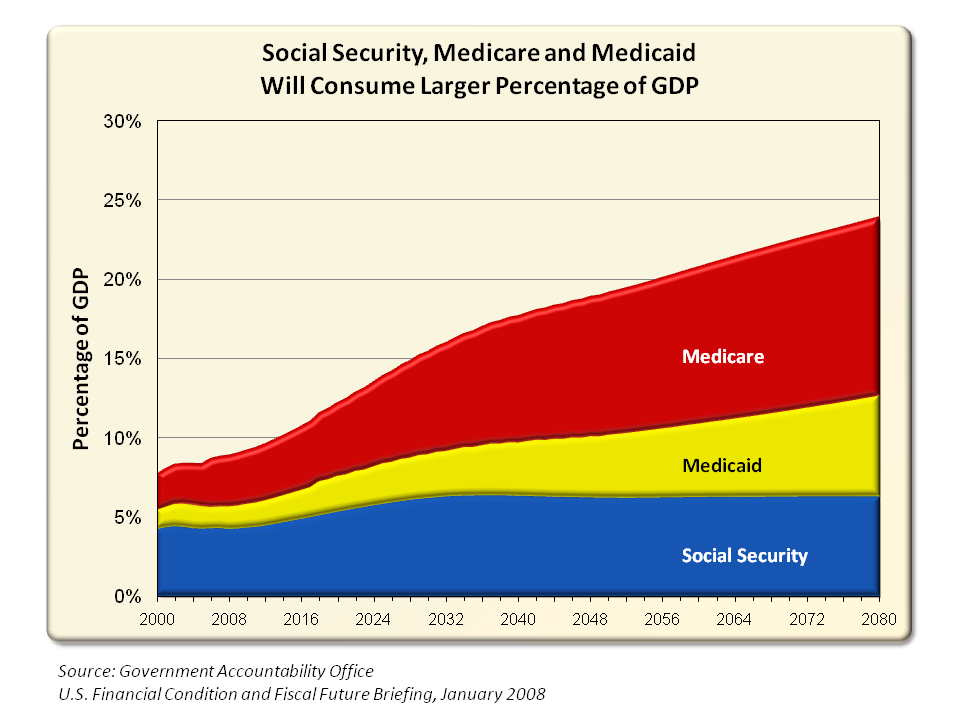
Clearly this trend cannot be sustained. And these government expenditures are only part of the snowballing costs of health care. This year we rejoice because in a depression/recession health care cost increases of 5-6% were only twice that of inflation. This is not cost containment.

Our conservative friends think markets would work to control health expenditures. That’s unproven and likely unworkable–see here, here, and here.

Patients are not in a position to shop health care. Finding the “best price” for emergency care and most other health care needs is simply not possible and the patient has to take whatever is available from the local supplier at the demanded price. Furthermore, health care is not like other commodities that people can take or leave as they wish. Buying a car or even a new home is an optional expenditure, health care is not. Yet health care costs/year for an individual can now approach and exceed these large expenditures.

Patient’s health care decisions reflect their anxiety, personal bias, financial status and understanding of the situation. This last factor should not be underestimated. Patients in the majority of instances cannot fully understand the risks and/or benefits of treatments and the alternatives, much less concern themselves with cost efficiency data. He/she is thus greatly influenced by physicians, manufacturers, insurers, etc., all with superior knowledge of the situation. All these advisors have extreme conflicts of interest that interfere with unbiased advice and undermine the notion of a “free health care market”–it doesn’t exist.

Medicynical note: The question is whether we have the political will to face this “music” and decide. We seem able to turn on a dime and go war, cut taxes for the wealthy and provide “tax incentives” for industry. For real people, however, we’ve become inert.

It appears our republican friends are unalterably opposed to change in the status quo that might affect the profits of their industry supporters. And the democrats, (it makes a cynic’s day) appear no more independent of industry influence.

Inaction will lead to more spending, more uninsured, more medical bankruptcy, more “free” ER use, more deaths from delays in care and a slow erosion in the general effectiveness of health care.

Somewhere between the “greatest generation” and our current one something happened. I think Pogo was probably right.