Category Archives: General Cynicism

Socialized Agriculture?

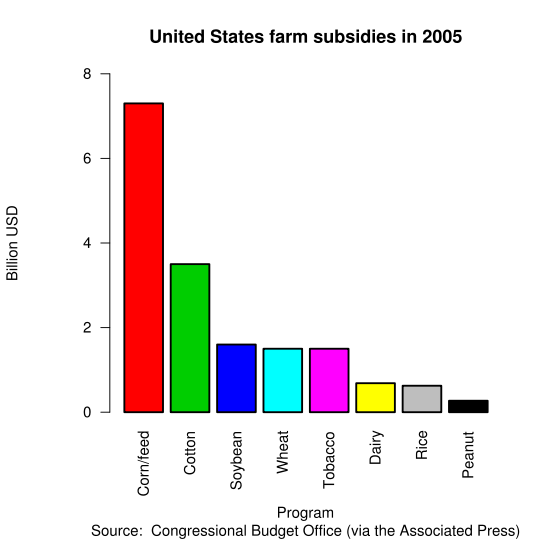
I don’t hear farmers complaining about their subsidies. Is this socialism?

The federal government wants to save taxpayers billions of dollars by reducing spending on crop insurance after years of big profits by insurers, but the industry claims the reductions could hurt rural areas.


Powerpoint Dysfunction Disorder

I wondered over the years why our military doesn’t anticipate and seems bound to spend several years flailing about before finding a strategy that works.

I think I’ve found the enemy! I hope our military has.

“When we understand that slide, we’ll have won the war,” General McChrystal dryly remarked, one of his advisers recalled, as the room erupted in laughter.


$617,000 Spent: Patient’s wife doesn’t know whether the treatment helped

The American “system” seems to have developed the fine art of separating patients from their money. Even with the best of intentions by all involved, our health care non-system for people with incurable disease is perilously close to a scam.

Watch this

Medicynical Note: Kidney cancer’s course varies widely. It often remains stable for years without treatment. This patient may have benefited but also it’s quite likely that after surgery none of the treatments altered the disease course–but did have great toxicity.

The surgery that removed the initial tumor cost $25,000–and the tumor was gone for two years. Avastin (a “new” targeted treatment) one dose cost $27,000 did nothing. Amazing what we’ll spend for a limited benefit  when we are desperately ill.

The Solution to Health Care Overpricing–go overseas, if you can afford it

Good old American efficiency: The article describes a man who needed some type of nasal surgery: The cost in the US $33,127, in UK, at a private hospital $2,930.

An estimated 878,000 Americans will travel internationally for a medical procedure this year, according to a report from the Deloitte Center for Health Solutions. That number is expected to nearly double by 2012.

The majority of medical tourists are uninsured; however, the cost of health care in this country has become so expensive that even some U.S. health insurance companies are coordinating with hospitals overseas.

Medicynical Note: We priced ourselves beyond our ability to pay. According to those opposing health reform, we have the “best health care system in the world.”

That of course is not quite correct. We do lead the world in:

  • Medical bankruptcy
  • Costs of health care, drug costs,
  • The number of people going overseas for care
  • The number of people by percent or absolute number without insurance coverage (in the industrialized world)
  • Administrative inefficiency
  • Drug company profits
  • Insurance company salaries and profits
  • Malpractice Premiums
  • Doctor’s Salaries (in most specialties)
  • and so on


What’s the real cost of Progress when a drug costs $100,000/year drug

It’s in vogue in medicine to market drugs offering slight benefit to desperately ill patients at cost of between $50,000 and $100,000/year.

What’s the real cost of these “advances.”

In a hypothetical (but typical) situation lets say the drug is used in 100 patients and compared with another group of 100 patients receiving placebo (or standard therapy).

As one would hope the group of patients receiving the study drug appears to have some response. In the distant past a response was defined as a decrease in tumor bulk of 50%. In recent years that definition has been broadened, some would say undermined, to mean that there was no evidence of tumor progression during treatment. Since we are in “modern” times lets use the definition of response being no progression.

We do our study and find in the group of patients receiving placebo (or standard therapy) 25% showed no progression. While in the study group receiving the new drug of 100 patients 40% showed no progression.

Drug companies take such data as evidence of the drug’s efficacy and try to get FDA approval. Note there is no evidence at this point of extension of life.

The real cost of this advance is interesting to contemplate. Consider treating 100 patients with a $100,000 drug–that’s 10 million dollars. Consider that just 40% get a “benefit” with the drug and 25% had the same “benefit” with placebo (or standard therapy)–and a marginal “benefit” at that. That means that 6 million dollars was spent on patient who got no “benefit” at all from the drug (the 60 of 100 patients without “benefit”). 2.5 million dollars on the 25 patients who would have shown no progression with placebo (or standard therapy). The incremental “benefit” of the drug over placebo or conventional therapy was therefore a total of 15 patients.

That means in our hypothetical but somewhat typical new drug situation 85 out of 100 patients will be treated with the $100,000/year drug and get nothing from it. 15 patients get a limited improvements. The cost/patient that improved is $100,000 X 100 patients treated/15 patients who get the improvement=$666,666 expended for each patient who improved. It should be noted that this is a cost per year figure for a single drug.

How much is a reasonable amount for the system to spend for an improvement. It’s been thought in the literature that between $50,000 and $150,000 per year of life gained was an affordable sum. It’s never been clear to me where these numbers came from but in the cost efficacy literature they seem to be the most used figures.

In our hypothetical situation our outcome was no progression of disease during the treatment period. But for the sake of our discussion lets say the study continues and the study patients (the 15% with benefit) lived a median of 2,3,4,5, or 6 months longer. For what it’s worth except for the very rare super effective new agent (Gleevec for example) most new biological agent’s improvement of survival is in the 2-6 month range.

If the median improvement is 2 months then the cost of a 12 month survival would be 6 X $666,666 (the cost/patient who benefitted) or about $4,000,000 to buy a total of a year’s survival time for patients who benefit from the treatment.

If the improvement is 6 months then the cost of 12 months survival would be 2 X $666,666 or in the range of 1.33 million dollars.

Neither would be considered cost effective by any of our current measures.

Medicynical Note: You won’t find the drug companies funding cost efficacy studies nor touting their results as cost efficient. Instead our hypothetical study would be touted as showing a 60% improvement in response rates between placebo and study group. (40% response rate with drug/25% with placebo or conventional Rx X 100=160%) It won’t be easy to find out that the difference between a “response” to placebo and the study drug was 15% (40% vs 25%) or that the benefit was just 2-6 months, if that. That the American way of drug marketing.

In case you think the above is exaggerated consider these from real life NEJM 355:2542-2550

The median survival was 12.3 months in the group assigned to chemotherapy plus bevacizumab, as compared with 10.3 months in the chemotherapy-alone group (hazard ratio for death, 0.79; P=0.003). The median progression-free survival in the two groups was 6.2 and 4.5 months, respectively (hazard ratio for disease progression, 0.66; P<0.001), with corresponding response rates of 35% and 15% (P<0.001). Rates of clinically significant bleeding were 4.4% and 0.7%, respectively (P<0.001). There were 15 treatment-related deaths in the chemotherapy-plus-bevacizumab group, including 5 from pulmonary hemorrhage.

Or this from today’s (April 25, 2010) Seattle Times:

Dendreon’s case rests largely on a study of more than 500 men with an advanced form of prostate cancer that spread to other parts of their bodies. Of the men who got Provenge, nearly a third were still alive in three years, compared with less than a quarter of those who got placebos. (medicynical emphasis) The vaccine boosted median survival time by 4 months, from 22 months in the placebo group to 26 months in the Provenge group.

How much difference is there between nearly a third and less than a quarter? I wonder who provided this verbiage? I figure an 8% benefit. Affordable?


Another Marginal $100,000 treatment–Provenge

Provenge, why so expensive? Yes there are development costs and clincal trials to pay for but not enough, in my view, to justify the pricing. We talk about holding practitioner’s fees down by looking at outcomes, shouldn’t we do the same with drugs that cost 100 times more?

The FDA by the way is not allowed to assess cost efficacy, their mandate is to document lack of harm and have evidence of minimal benefit. Interestingly, many times in the past the initial studies benefit was proven to be overstated and the risks understated.

The treatment’s benefits are modest. But as the first product of its type to emerge from decades of often-frustrating research, Provenge could help open doors for immune-based therapies against a range of cancer.

Analysts estimate a course of Provenge will cost between $50,000 and $75,000. As many as 100,000 men a year develop the advanced form of prostate cancer the treatment would initially be prescribed for. At that rate, Dendreon could rack up well over $1 billion in annual sales in a few years, said David Miller, president of Biotech Stock Research in Seattle. If the company isn’t swallowed up by a pharmaceutical firm — a big “if” — its success would boost the region’s stature and draw as a biotech hub.

The vaccine boosted median survival time by 4 months, from 22 months in the placebo group to 26 months in the Provenge group.

Medicynical note: The company claims an investment of $750,000,000–it’s been thought by many that these “investments” are routinely overstated (Read Marcia Angell and her book The Truth About the Drug Companies: How they Deceive Us and What to Do about it). Dendreon’s estimate is that the drug in the first year will provide over a billion dollars in sales. Don’t expect the prices to go down with time.

It is the American way to reward innovation and this approach clearly is innovative, though modestly effective. But can any system afford such pricing for an incremental (3-4 month), if that, improvement? Isn’t there a more efficient way to drug development? If health insurance wasn’t there to buffer patients and their families could the majority of us afford such an “advance.” Can we as a failing society, slowly bankrupting ourselves, afford it?


Polio Resurgent-A warning for vaccine deniers

Despite a worldwide vaccine program, polio is showing signs of resurgence. The problems? Incomplete vaccine use and availability–partially driven by misinformation and rumor mongering– lack of information, and a poor distribution system.

Polio was spreading across Africa, even after he gave $700 million to try to wipe out the disease.

That outbreak raged last summer, and this week a new outbreak hit Tajikistan, which hadn’t seen polio for 19 years.

“There’s no way to sugarcoat the last 12 months,” Bruce Aylward, a WHO official, told Mr. Gates in the meeting in the underground pandemic center last June. He described how the virus was rippling through countries believed to have stopped the disease.

Part of the problem is misinformation:

Men like the sultan are important allies. In 2003, Islamic leaders in northern Nigeria spread rumors that polio vaccines sterilized Muslim girls. Leaders halted vaccinations, allowing the virus to spread. The WHO said the virus eventually infected 20 countries.

Medicynical Note: For more information, you should read the full article.

This should be a warning to those in our country who deny the benefits of vaccines and refuse to allow their kids this protection. It seems redundant to remind people of the seriousness of this disease which causes permanent neurological disability, for which there is no cure.

The article also approaches the dilemma of whether to target single diseases (following the model of the successful smallpox vaccination program of the 60’s) or include vaccination in a broader based approach to health and hygiene. From a medicynical point of view, I would point out that one of these goals might be achievable in our lifetimes, the other not.


Health Insurers (Wellpoint) — It’s not about health care, its about the money

Get a disease and really need your health coverage, then Wellpoint should NOT be your insurer!

Shortly after they were diagnosed with breast cancer, each of the women learned that her health insurance had been canceled. There was Yenny Hsu, who lived and worked in Los Angeles. And there was Patricia Reilling, a successful art gallery owner and interior designer from Louisville, Kentucky.

They had no idea that WellPoint was using a computer algorithm that automatically targeted them and every other policyholder recently diagnosed with breast cancer. The software triggered an immediate fraud investigation, as the company searched for some pretext to drop their policies, according to government regulators and investigators.

Medicynical Note: It’s so outrageously hypocritical that it makes a medical cynic cry (with joy). Imagine all the blog posts that will arise from these bizarre but real policies.


Berwick’s Triple Aim–Costs matter, duh!

Dr. Don Berwick has been named Medicare and Medicaid administrator. His views on “The Triple Aim“: Care, Health and Cost” provide a blueprint for change. Whether we are able to adopt some of these aims is a big question”

If we could ever find the political nerve, we strongly suspect that financing and competitive dynamics such as the following, purveyed by governments and payers, would accelerate interest in the Triple Aim and progress toward it:
(1) global budget caps on total health care spending for designated populations
(2) measurement of and fixed accountability for the health status and health needs of designated populations,
(3) improved standardized measures of care and per capita costs across sites and through time that are transparent,
(4) changes in payment such that the financial gains from reduction of per capita costs are shared among those who pay for care and those who can and should invest in further improvements, and
(5) changes in professional education accreditation to ensure that clinicians are capable of changing and improving their processes of care.

Medicynical Note: I like the idea of global budgets. We need to change the money driven attitudes of our non-system and balance it with reality, quality and the notion of performing a service.

People always have the option of funding, themselves, that which is not able to be covered or which is deemed not good enough for coverage by the general program.


Erlotinib (Tarceva) Maintenance in lung cancer–or why health care is so expensive

Non-resectable metastatic non small cell lung cancer is a uniformly fatal illness. Patients may respond temporarily to treatment but in virtually all cases the disease will eventually progress. Therapy, depending on the extent of disease, is a combination of chemotherapy and radiation.

Erlotinib (Tarceva), a epidermal growth receptor inhibitor (HER1/EGFR), was recently approved by the FDA as maintenance therapy for the disease in patients with stable disease after treatment with platinum based therapy. The approval was based on the results of the Saturn study which was reported at the 2009 ASCO meeting.

The study showed:

Response rate was 12% with E versus 5% with P (platinum based treatment). Disease control rate (complete response + partial response + stable disease >12 wks) was
40.8% with E versus 27.4% with P (p<.0001). OS (Overall survival) data are not yet
mature.

Further analysis released in August 2009 showed:

The study showed that patients with NSCLC treated with Tarceva had a 23 percent improvement in overall survival compared with patients who received placebo (hazard ratio=0.81; p-value=0.0088). The hazard ratio, which assesses risk in the overall trial population, is widely recognized as the best measure of overall benefit in large randomized clinical trials. A hazard ratio of less than one for survival indicates a reduced risk of death. The median survival (a single point estimate of benefit) for patients receiving Tarceva was 12 months versus a median survival of 11 months for patients receiving placebo. (medicynical emphasis)

Medicynical note: The yearly cost of Tarceva is in the range of $30,000-60,000/year. This according to the Saturn study buys an improvement in median survival of 1 month. Added to this are the cost of the initial platinum based chemotherapy, radiation if given, doctor’s fees and imaging costs.

Is it cost effective to spend over $30,000-60,000 or more depending on length of treatment for a median survival improvement of 1 month? If not covered by insurance would you pay for this drug? Would you expect someone else to pay for it for you?